
Cleaning gutters yourself without getting hurt
Most gutter injuries come from the ladder, not the gutter. Set it up right, keep your weight between the rails and know which jobs belong to someone with better equipment.
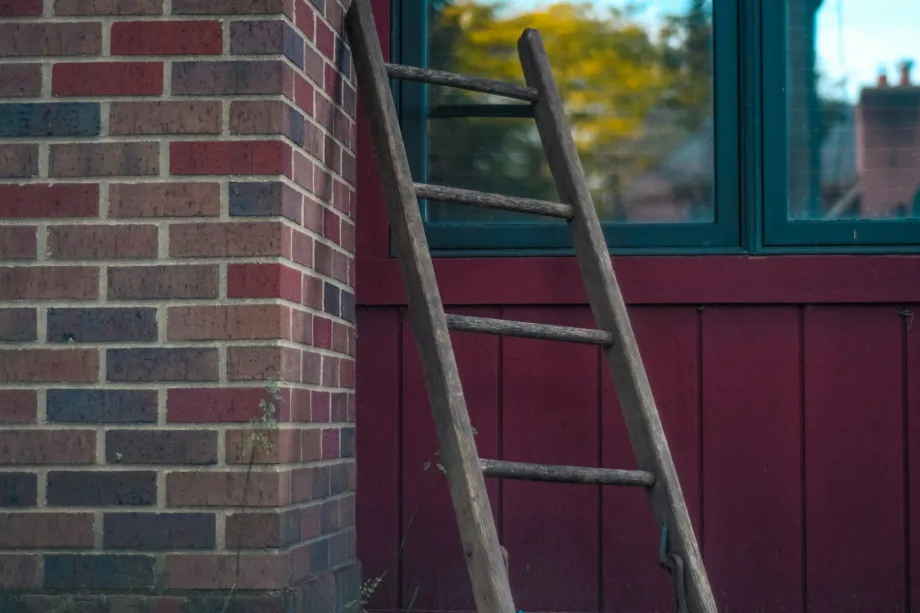
Clearing gutters is simple work done in an awkward place. The scooping takes minutes. The risk sits in every climb, every reach and every time the ladder gets moved along the wall. Along the Lake Erie shore the job usually lands in late fall, when the ground is soft from rain, mornings are cold and the light fades early. That is exactly when people hurry.
Pick a ladder that fits the house
For a one-story ranch, a solid stepladder or a short extension ladder normally reaches the eave with room to spare. A two-story home needs an extension ladder long enough that you can work with your hips well below the top. If you find yourself on the highest rungs to see into the gutter, the ladder is too short.
Read the duty rating label before you buy or borrow. It should cover your body weight plus boots, tools and a bucket of wet leaves, which is heavier than it looks. Fiberglass rails are worth considering for anyone working near the service drop, since aluminum conducts electricity.
Then look the ladder over. Bent rails, cracked or loose rungs, missing feet and sticky locks on an extension ladder are all reasons to set it aside. A ladder that has spent winters outside deserves a slow inspection.
Setting it up on soft, uneven ground
Foundation beds and lawns along the house are often damp, sloped or freshly mulched. Ladder feet sink unevenly in that kind of soil, and a ladder that is level when you climb may not be level ten minutes later. Look for the firmest spot within reach, and use leg levelers or a wide, flat base made for ladders if the ground is uneven. Never prop a foot on bricks, blocks or scrap wood.
For extension ladders, a common rule of thumb is one foot out from the wall for every four feet of height to the top support point. OSHA uses the same ratio for work ladders. Too steep and the ladder can tip back. Too shallow and the base can kick out.
Keep the ladder off the gutter
Leaning the rails against an aluminum or vinyl gutter is a poor idea. The gutter can crush, and its curved lip lets the ladder slide sideways. A stand-off stabilizer clamps to the top of an extension ladder and spreads its arms across the wall or roof surface, holding the rails clear of the gutter. It also leaves room to work inside the trough without leaning around the ladder.
Habits on the ladder
Keep three points of contact while climbing: two hands and a foot, or two feet and a hand. That means nothing in your hands on the way up. Hang a bucket from the ladder with a hook, or raise it on a rope once you are in position.
Your belt buckle should stay between the rails. Reaching sideways shifts your weight over one foot of the ladder, and that is how ladders walk out from under people. Climb down and move it, even if that means a dozen moves along one wall.
Stay off the top rungs of an extension ladder and the top cap and step of a stepladder. The ladder's own labels mark the highest safe standing level, and the manufacturer's instructions are the final word.
Gear worth having
Thick work gloves protect against sharp gutter edges, screws and whatever has been rotting in the trough. Safety glasses keep grit and dirty spray out of your eyes when you flush with a hose overhead. Boots with a clean, grippy sole matter more than most people expect, because wet rungs and wet grass are both slippery.
Hazards above and around you
Look up before you raise a ladder. The electric service line often meets the house near the roof edge, sometimes right where a downspout sits. Keep yourself, the ladder and any pole tools well clear of it. Safety guidance from OSHA and utilities commonly calls for at least ten feet from overhead lines. If a gutter runs close to a line, leave that stretch to the utility or a qualified pro.
Do not walk the roof to clean from above. Wet shingles, moss, loose granules and frost all make a pitched roof slick, and cold asphalt can crack under foot traffic. If part of a gutter cannot be reached from a ladder on firm ground, that part is not a do-it-yourself job.
A sensible order of work
- Set the ladder on firm ground with the stabilizer fitted and check the angle.
- Hang your bucket and put on gloves and glasses before climbing.
- Scoop debris into the bucket by hand or with a plastic scoop instead of dropping it on beds below.
- Move the ladder as often as needed to keep your reach short.
- When the trough is clear, run a hose from the far end toward the outlet and watch it drain.
- Check the downspout. If water backs up, clear the outlet strainer and flush the pipe from the top.
Bring a helper
A second person on the ground makes the whole job safer. They can steady the base while you climb, pass tools up, empty the bucket and keep kids and pets out from under the work. If something does go wrong, someone is there to help or to call for it. Working alone on a ladder turns a small slip into a long wait.
When to hire it out
Some houses are simply better left to people with the right gear. Second-story eaves mean a tall, heavy extension ladder that is hard to raise and carry, and any fall from that height is serious. Steep yards, terraced beds, decks and sunrooms below the eave can make a correct ladder angle impossible. Pros bring longer ladders, leveling equipment and fall protection that most homeowners do not own.
Be honest about your own body as well. Wrestling a ladder around the house dozens of times is hard on shoulders and knees. Dizziness, balance problems or a real fear of heights are good reasons to stay on the ground. Hiring someone for the high runs and keeping the low ones yourself is a perfectly reasonable split.
Frequently asked questions
What kind of ladder should I use for gutter cleaning?
For a one-story house a sturdy stepladder or short extension ladder usually reaches. A two-story house needs an extension ladder long enough to reach the eave without standing near the top. Check the duty rating label so the ladder covers your weight plus tools and a full bucket.
Is it safe to lean a ladder on the gutter?
It is better not to. Gutters bend under the load and a rounded gutter lip gives the ladder little grip. A stand-off stabilizer bridges over the gutter and rests the ladder on the wall or roof instead.
Can gutters be cleaned from the ground?
Light, dry debris can sometimes be cleared with telescoping attachments made for the job. Packed wet leaves and grit usually still need hand removal, so ground tools are a supplement rather than a replacement.
When is hiring someone the better choice?
Two-story or higher eaves, steep or sloping ground, power lines near the roof edge, or any doubt about your balance at height are all good reasons to hand the job to a pro with the right ladders and fall protection.
Related guides

When to clean gutters in northern Ohio
Near Lake Erie the gutter calendar follows the trees and the freeze. A thorough clean after the leaves are down in late fall and another once spring seeds have dropped co…
Choosing gutter materials, profiles and sizes
The right gutter for a house near Lake Erie has to carry summer downpours and survive winters of freeze-thaw and ice. Material, profile, size and the way it hangs all pla…

Finding and fixing gutter leaks
A leaking gutter rarely announces itself at the leak. The clues show up below it, on siding, trim and the ground, and most of them can be read without a ladder.