
Finding and fixing gutter leaks
A leaking gutter rarely announces itself at the leak. The clues show up below it, on siding, trim and the ground, and most of them can be read without a ladder.
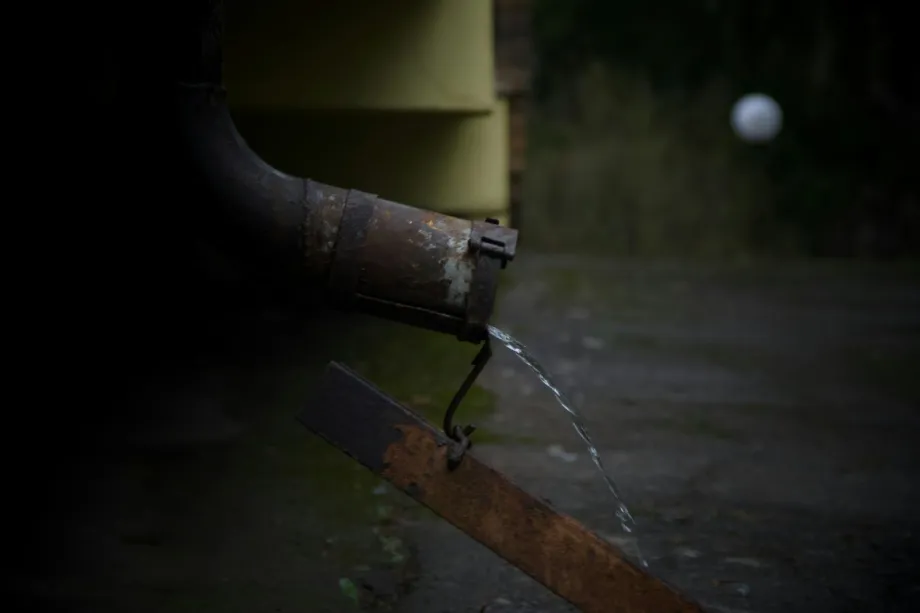
Read the signs from the ground
Walk around the house during a steady rain or right after one. A gutter that is working sends water to the downspouts and nowhere else. Anything else is a clue.
Drips running down the fascia behind the gutter suggest water is getting behind it, either at the roof edge or through a joint in the back wall. Streaks or dirty tracks on siding below the gutter line point to overflow or a leak above that spot. Paint that peels or blisters on trim directly under the gutter has usually been wet for a long time.
The ground tells its own story. A puddle against the foundation, a little trench in the mulch, gravel pushed aside or a bare patch in a flower bed all mark a spot where water is landing hard and often. Line those marks up with the gutter overhead and you have a short list of places to check.
Where leaks usually form
Seams and end caps
Joints are the first suspects. Sectional gutters have them every few feet, and every gutter has them at corners, end caps and downspout outlets. Sealant hardens and cracks with age, and the yearly freeze-thaw near the lake works joints loose. End caps also take a beating when slush piles up at the end of a run during a thaw.
Holes and rust
Wet leaves left in a gutter hold water against the metal for weeks. On steel gutters, that wears through the protective coating and rust follows, first as spots, then pinholes, then larger openings. Aluminum does not rust the way steel does, but standing water and debris can still corrode it over time, and thin aluminum punctures easily.
Sagging and loose hangers
A gutter that sags in one place collects water there instead of draining. That low spot is where leaks appear at fastener holes or where water spills over the front. Ice and heavy wet snow are common causes, along with old spikes working out of the fascia. Before sealing anything near a sag, fix the support. Refasten or add hangers into solid wood so the gutter holds its slope again.
Sealing a joint or small hole
Small leaks at seams and pinholes are a reasonable do-it-yourself fix on a one-story house. Pick a dry stretch of weather and check the sealant label for the temperature range it needs.
Start with preparation, because it decides whether the repair lasts. Clean out the gutter around the leak. Scrape away the old sealant, brush off dirt, algae and loose rust, and wipe the area with a cleaner the sealant maker recommends. Let it dry completely.
Then apply a sealant made for gutters over the joint or hole from the inside of the trough, working it into the gap and smoothing it out. Applying it inside matters. Water in the gutter then presses the sealant into the joint rather than lifting it away. Give it the full cure time on the label before the next rain if you can.
Patching larger holes
A hole bigger than a small nail hole needs more than a bead of sealant. A patch cut from flashing of the same metal as the gutter, or one compatible with it, bridges the gap.
Cut the patch so it overlaps the hole well on every side. Clean and dry the area as above, bed the patch in gutter sealant, press it flat and seal over the edges. Using matching metal avoids corrosion where different metals touch.
Loose end caps
If an end cap is leaking, take it off if it comes free easily, clean out the old sealant from both the cap and the gutter end, apply fresh sealant around the inside rim, and press it back on. Secure it with short screws or rivets if the old fasteners have failed.
When a new section is the better fix
Patches have limits. Several rust holes spread along a run mean the metal is failing, and patching one just moves the leak to the next. A gutter crushed by a branch or twisted by ice is unlikely to hold its shape or slope after being bent back, and stressed metal can crack.
If the back wall of the gutter has split or rusted through, water goes straight onto the fascia whatever you seal. A joint that leaks again soon after careful resealing is also telling you something. In those cases, replacing the damaged length between joints or hangers with matching stock is usually the better fix.
Check the wood behind the gutter
A long-running leak often leaves damage you cannot see from the ground. While the gutter is clean, look at the fascia behind it and the roof edge above it. Soft, dark or crumbly wood means water has been getting in for a while. Gutters need solid wood to hold onto, so rotted fascia has to be repaired before the gutter can be hung properly again, which usually means taking the gutter down.
Ladder safety and calling in help
Leak repairs are ladder work, often with both hands busy. Set the ladder on firm, level ground with a stabilizer so it rests on the wall or roof rather than the gutter, keep your body between the rails, and stay off the top rungs. A helper at the base is a real advantage when you are juggling a caulk gun and a scraper.
Hand the job to a gutter or roofing contractor if the leak is on a second story or above, if the ground below is steep or cluttered, or if the fascia behind the gutter is rotten. Those repairs often mean removing gutter runs and replacing wood, which is a bigger and riskier job than sealing a seam.
Frequently asked questions
Why do gutter seams start leaking after winter?
Freeze-thaw and temperature swings make metal move and can push water into joints, where it freezes and expands. Over time that cracks old sealant and loosens the joint.
Should gutter sealant go on the inside or outside?
On the inside of the trough, over the joint or hole. Water then presses the sealant into place instead of pushing it off.
What sealant should I use?
Use a sealant labeled for gutters and compatible with your gutter material, and follow the label for surface prep, temperature and cure time. General indoor caulk does not last outdoors.
When is it time to replace a section instead of patching?
Several rust holes along a run, a split or rotted back wall, metal that has been badly bent, or a joint that fails again after resealing are all signs that a new section is the better fix.
Related guides
Choosing gutter materials, profiles and sizes
The right gutter for a house near Lake Erie has to carry summer downpours and survive winters of freeze-thaw and ice. Material, profile, size and the way it hangs all pla…
Cleaning gutters yourself without getting hurt
Most gutter injuries come from the ladder, not the gutter. Set it up right, keep your weight between the rails and know which jobs belong to someone with better equipment…
Gutter guards compared for homes near Lake Erie
Gutter guards cut down on cleaning, but each type fails in its own way. What falls on your roof, and how much ice it sees, decides which one makes sense.