
Choosing gutter materials, profiles and sizes
The right gutter for a house near Lake Erie has to carry summer downpours and survive winters of freeze-thaw and ice. Material, profile, size and the way it hangs all play a part.
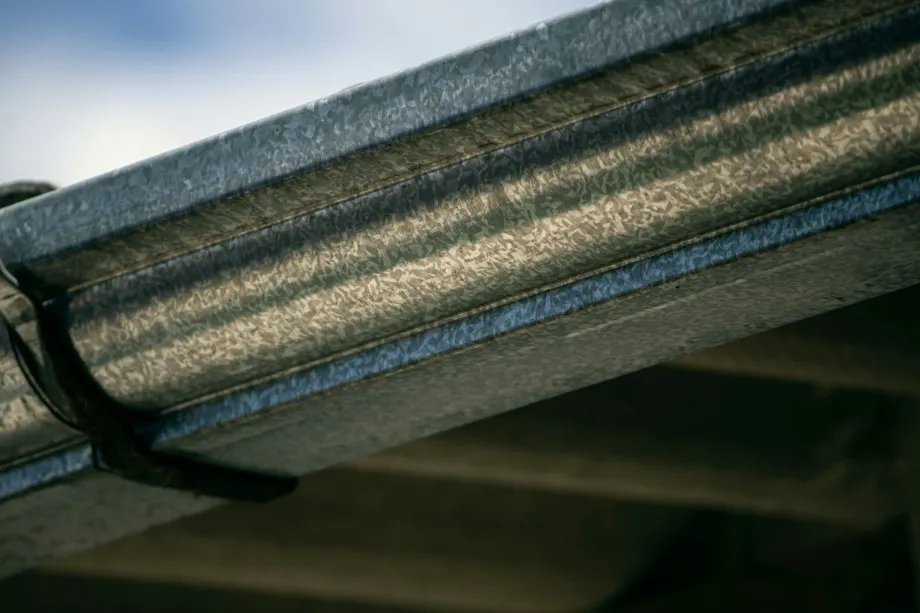
What the lake asks of a gutter
A gutter near the lake works hard in every season. Summer thunderstorms dump a lot of water in a short time. Fall brings wet leaves. Winter piles on lake-effect snow, then melts and refreezes it at the eave again and again. A gutter that is too small overflows, and one that is weakly hung sags or pulls away under ice.
So the choice goes beyond color. It comes down to four decisions: material, profile, size and hardware, plus the condition of the board it all hangs on.
Materials and how they handle freeze-thaw
Aluminum
Aluminum is the most common residential gutter material in the region. It does not rust, it is light enough to handle easily, and it can be formed on site into long seamless runs. Thicker stock resists dents from ladders and falling branches better than thin stock, which is worth asking about. Its weak point is denting, and the fix for that is good gauge and closely spaced hangers.
Vinyl
Vinyl is inexpensive, light and sold in snap-together sections that suit do-it-yourself work. It does not rust. The trouble is cold. Vinyl moves a lot with temperature and becomes less flexible in deep cold, which makes it more likely to crack under ice, falling branches or a misplaced ladder. Years of sun can also fade it and make it brittle.
Galvanized steel
Steel is stiff and strong, and it keeps its shape under loads that would bend lighter gutters. Its protective zinc coating is what keeps it from rusting. Once that coating is scratched or worn through, by ladders, ice or cleaning tools, rust can start, and standing water with rotting leaves speeds it up. Steel rewards regular cleaning and quick touch-up of damaged spots.
Copper
Copper lasts a very long time and slowly darkens to a brown and then green patina. Joints are typically soldered, which makes for tight connections. It is heavy, and installing it well calls for specialized skills and tools, so it shows up mostly on higher-end or historic homes.
K-style or half-round
The profile is the shape of the gutter seen from the end.
K-style gutters have a flat back that sits against the fascia and a front face shaped a bit like crown molding. The flat bottom and straight sides carry more water than a half-round gutter of the same width, and the flat back makes mounting simple. That is why K-style is standard on most houses in the area.
Half-round gutters are a semicircle in section. The smooth inside has no corners for debris to catch in, so water flushes them well. They carry less than a K-style of the same width, and because the back is curved they hang from brackets designed for the shape. Many owners of older homes choose them for looks.
Sizing for roof area and downpours
Gutter size is about how much water reaches the eave at once. Three things drive it: the area of roof draining into a run, how steep that roof is, and how hard the rain falls. Steeper roofs shed water faster and can throw it over the front of a small gutter. Valleys concentrate water from two roof planes onto one short stretch of gutter.
Five-inch K-style gutters are common on houses, and six-inch gutters are the usual step up for big or steep roofs. Downspouts matter just as much. A wide gutter feeding a narrow downspout still backs up. Larger downspouts, or adding more of them so each serves a shorter run, move more water and are less prone to clogging with leaves.
If a clean gutter regularly overflows in ordinary heavy rain, sizing is a likely suspect. An installer can work out what a given roof needs from its area and pitch.
Hangers, spikes and fascia
The gutter is only as secure as what holds it.
Older installations often used spikes driven through the face of the gutter, through a sleeve called a ferrule, into the fascia. As the wood dries, swells and ages, spikes tend to work loose, and ice in the gutter pries them further out. The result is a sagging, wavy line.
Most current installations use hidden hangers that clip inside the gutter lip and fasten to the fascia with screws. They hold better, look cleaner and do not puncture the front of the gutter. In snow country, closer spacing adds support. Follow the manufacturer's spacing and ask the installer what they use for heavy snow loads.
None of that helps if the fascia is rotten. Water running behind old gutters often softens the board, and screws will not hold in soft wood. Peeling paint, dark staining and spongy spots along the fascia mean it should be repaired before new gutters go up.
Putting it together
For a typical house near the lake, the common combination is aluminum in a K-style profile, sized for the roof, with roomy downspouts and hidden hangers screwed into sound fascia. Steel or copper make sense for owners who want extra stiffness or a long-lived traditional look and are prepared for their upkeep or cost. Vinyl works best on small, sheltered structures.
Gutter installation means long hours on a ladder with heavy or awkward pieces. If the eaves are high, the roof is complex or you are not confident working at height, leave the job to an experienced installer.
Frequently asked questions
Which gutter material holds up best in northern Ohio winters?
Each has trade-offs. Aluminum is the common all-round choice, steel is stiffer but needs its coating kept intact, copper lasts a long time with skilled installation, and vinyl tends to get brittle in deep cold.
Should I choose K-style or half-round gutters?
K-style carries more water for the same width and mounts flat to a fascia board, which is why it is standard on most houses. Half-round suits some older or traditional homes and needs brackets made for its shape.
When does a house need bigger gutters?
Large or steep roof sections, valleys that pour onto one spot and runs that overflow in heavy rain even when clean all point toward a larger gutter, larger downspouts or more downspouts. An installer can size them from your roof area.
Are spikes or hidden hangers better?
Hidden hangers screwed into sound fascia generally hold better than the old spike and ferrule method, which tends to loosen over time.
Related guides
Seamless or sectional gutters, and how to choose
Every joint in a gutter is a place water can find its way out. Seamless runs formed on site cut down on those joints, while sectional gutters trade more seams for easy re…

Finding and fixing gutter leaks
A leaking gutter rarely announces itself at the leak. The clues show up below it, on siding, trim and the ground, and most of them can be read without a ladder.
Cleaning gutters yourself without getting hurt
Most gutter injuries come from the ladder, not the gutter. Set it up right, keep your weight between the rails and know which jobs belong to someone with better equipment…