
Gutter guards compared for homes near Lake Erie
Gutter guards cut down on cleaning, but each type fails in its own way. What falls on your roof, and how much ice it sees, decides which one makes sense.
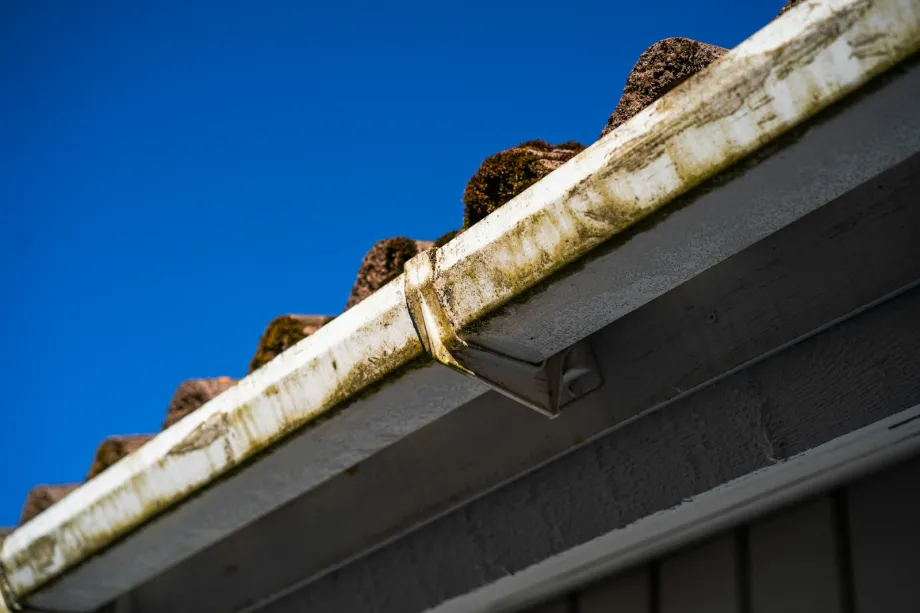
Leaves, seeds and roof grit all end up in the same trough. Along the Lake Erie shore that means heavy oak and maple drop in fall, maple helicopters in spring, needles from pines all year, and granules washing off asphalt shingles in every rain. Gutter guards try to let the water in and keep the rest out. None of them manage it perfectly.
What a guard can and cannot do
Every guard is a filter, and filters clog. The useful question is not whether a guard needs maintenance but what kind, how often, and whether you can do it from a ladder without much fuss. A guard that turns a messy twice-a-year scoop into an occasional brush-off is doing its job.
Guards also change how a gutter behaves in winter, which matters a lot near the lake. Keep that in mind as you read through the four common types.
Screens
Screens are the simplest option: panels of plastic, metal wire or perforated aluminum that sit over the trough. Some snap onto the front lip, others tuck under the first row of shingles.
Big, dry leaves tend to blow off a screen. Small debris is another story. Pine needles slip through the openings and settle in the gutter. Maple seeds can lodge in the holes point down and stand there catching more debris. Shingle grit passes straight through. Over a season, leaves can mat on top of a flat screen and keep water from getting in, so expect to brush the screens clear.
Micro-mesh
Micro-mesh guards stretch a fine metal mesh over a rigid frame. The openings are small enough to hold back needles, seeds, oak tassels and most grit while water passes through.
They handle small debris better than any other type here. They are not free of upkeep, though. Wet oak leaves can lie flat on the mesh during a downpour and send water over the front of the gutter. Pollen and fine grit, especially mixed with tree sap, can build a film over the mesh that slows water intake. A soft brush and a hose usually bring it back.
Reverse curve
A reverse curve guard is a solid cover that wraps over the gutter and curls down at the front edge. Water follows the curve by surface tension and drops into a narrow slot, while leaves are meant to slide off and fall to the ground.
These suit houses with lots of large leaves. Needles and seeds can follow the water around the curve and into the slot, and sticky debris on the lip can stop the water from turning in. In very heavy rain the water may sheet past the slot entirely and overshoot the gutter. Proper alignment with the roof pitch matters, so these are usually a job for an installer.
Foam inserts
Foam inserts are porous blocks that fill the trough. Water soaks down through the foam while leaves sit on top.
They are easy to fit, but they have real drawbacks in this climate. Needles poke into the foam and stay. Fine grit and organic dust work into the pores and clog them from the inside, and seeds can sprout in the damp material. The foam also holds moisture against the gutter for long stretches, which is hard on steel gutters in particular. Plan on removing and cleaning or replacing the inserts periodically.
Snow and ice on guards
Winter is where guards show their limits near the lake. Snow piles on top, partial thaws send meltwater down the roof, and that water can refreeze across the mesh, slots or screen. Once the guard is capped with ice, more meltwater runs over it and off the front edge, building icicles.
Guards do not cause ice dams, and they do not prevent them. That problem starts in the attic, and the ice dams article in this guide covers it. What guards can do is add weight. A gutter carrying a guard plus snow and ice needs sound fascia and hangers that are spaced and fastened well. Loose or widely spaced hangers are a weak point under that load.
Roof warranties and the shingle edge
Many screens and some mesh products are designed to slide under the first course of shingles. On an asphalt roof, lifting those shingles can break the adhesive strip that holds them down in wind, especially in cold weather when the shingles are stiff. It can also change how water leaves the roof edge.
Before buying a guard that goes under the shingles, read your shingle warranty and the guard instructions. Guards that clip to the gutter lip or fasten to the fascia avoid the issue. If you are unsure, the shingle manufacturer or your roofer can tell you what is allowed.
Matching the guard to your trees
A rough way to decide:
- Mostly big leaves, few needles: screens or reverse curve covers usually cope.
- Pines, spruces or lots of maple seeds: fine mesh tends to work best.
- Mixed trees and a tight budget: screens that clip to the gutter lip, with a plan to brush them clear.
- Foam: easiest to install, but expect the most upkeep over time.
Upkeep and safety
Look at guards after leaf drop and again in spring. From the ground, watch for overflow during rain. From the ladder, check for matted leaves, film on mesh and anything wedged in the slot. Treat this as normal ladder work with a stabilizer and firm footing, and never lean the ladder directly on a guarded gutter.
Simple clip-on screens on a one-story house are a reasonable weekend project. Two-story eaves, reverse curve systems that need precise alignment and anything that involves lifting shingles are better handed to an installer who will also check the gutter pitch and hangers before covering everything up.
Frequently asked questions
Do gutter guards mean I never have to clean my gutters?
No. Guards keep most large debris out, but fine grit, pollen and small seeds still collect on top or get through. Expect to brush off the guards and flush the gutters from time to time.
Can gutter guards affect a roof warranty?
Some guards slide under the first course of shingles, which can lift them and break the seal strip. Read the shingle warranty and the guard instructions first, or choose a guard that fastens to the gutter or fascia only.
Which guard handles pine needles and maple seeds best?
Fine mesh guards generally block small debris better than screens with larger openings. Needles can still lie on top and need brushing off now and then.
Do gutter guards stop ice dams?
No. Ice dams come from heat escaping into the attic. Guards can freeze over in winter, and meltwater may then run over them and form icicles.
Related guides
Choosing gutter materials, profiles and sizes
The right gutter for a house near Lake Erie has to carry summer downpours and survive winters of freeze-thaw and ice. Material, profile, size and the way it hangs all pla…

Finding and fixing gutter leaks
A leaking gutter rarely announces itself at the leak. The clues show up below it, on siding, trim and the ground, and most of them can be read without a ladder.

Cleaning gutters yourself without getting hurt
Most gutter injuries come from the ladder, not the gutter. Set it up right, keep your weight between the rails and know which jobs belong to someone with better equipment…