
Ice dams, icicles and gutters in a lake-effect winter
An ice dam starts in the attic, not in the gutter. Heat leaking up from the house melts roof snow, and the water refreezes at the cold eave, where full gutters give it more to hold onto.
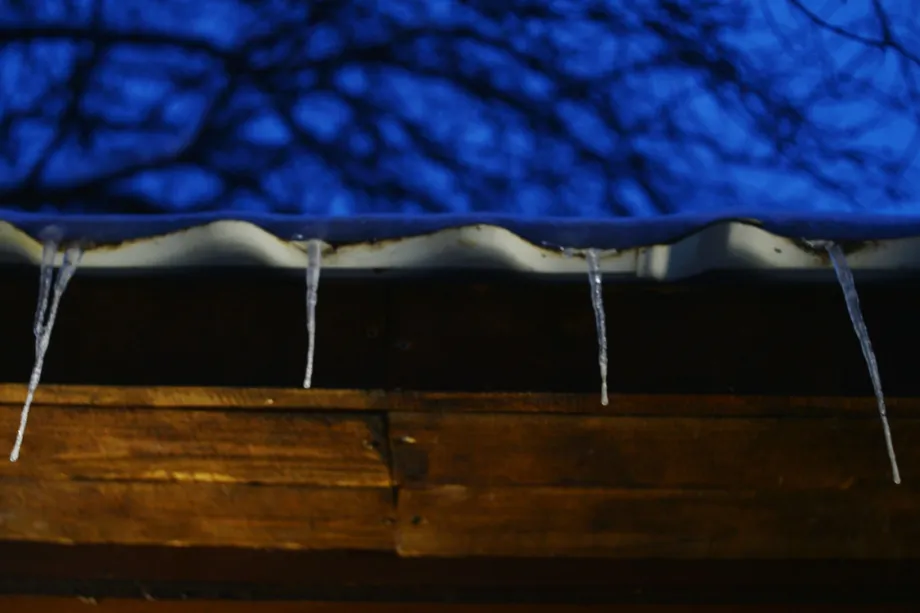
How an ice dam forms
Lake-effect snow can pile up on a roof fast, and a deep layer of snow works like a blanket. If warm air from the house is leaking into the attic, the roof deck above the living space warms up and melts the underside of that snow.
The meltwater runs down the roof under the snow until it reaches the eave. The overhang sits outside the heated walls of the house, so it stays as cold as the outdoor air. The water freezes there. Day after day, more melt arrives and freezes on top, building a ridge of ice along the edge of the roof and in the gutter.
That ridge is the dam. Water collecting behind it has nowhere to drain, so it backs up under the shingles. From there it can soak the roof deck, wet insulation, stain ceilings and run down inside walls. Rows of big icicles along the eaves are often the visible sign that this is happening.
The real fix is in the attic
Because ice dams start with a warm roof, the lasting solution is keeping the roof deck cold. That comes down to three things done together.
Seal air leaks
Warm, moist air rises into the attic through gaps around ceiling lights, attic hatches, plumbing and wiring holes, chimneys and bath fans. Sealing those paths is usually the first and most effective step, because moving air carries a lot of heat.
Insulate
Once the leaks are sealed, enough insulation on the attic floor keeps heat in the living space where it belongs. The right amount depends on the house and its current insulation, and an energy auditor or insulation contractor can measure what is there now.
Ventilate
Ventilation brings cold outside air in at the eaves and lets warmer air out near the ridge. That airflow under the roof deck carries off leftover heat, so snow melts from sun and weather rather than from the house below. Soffit vents need to stay open, not blocked by insulation.
None of this is a gutter repair, but it is what actually prevents ice dams. Many utilities and energy programs offer home energy audits that look at exactly these problems.
What gutters have to do with it
Gutters do not cause ice dams, but full gutters make them worse. If the trough is packed with wet leaves when winter arrives, water freezes in it early, and the ice in the gutter becomes the base the dam grows from. Cleaning gutters in late fall gives meltwater a path during the first thaws.
Ice is also heavy. A gutter filled with ice and topped with snow carries far more weight than it was designed to hold for running water. Hangers bend, spikes pull out of the fascia and whole sections can tear away. In snow country, sound fascia and well-fastened hangers are worth checking every fall.
Clearing snow safely from the ground
Pulling snow off the lower part of the roof after a big storm reduces the snow available to melt and refreeze at the eave. The safe tool for this is a roof rake, a wide blade on a long pole that you use while standing on the ground.
Work from well back of the roof edge so falling snow and ice do not land on you. Pull snow down in thin layers from the first several feet above the gutter, moving along the house as you go. Rakes with small rollers or bumpers on the blade are gentler on shingles. Keep the pole clear of the electric service line.
Do not climb onto a snowy or icy roof, and do not set a ladder on frozen ground or packed snow to reach the eaves in winter. Falls in those conditions are common and serious.
Never chip the ice
It is tempting to attack an ice dam with a hammer, chisel, shovel or pry bar. Do not. Cold shingles crack easily, the waterproofing under them can be punctured, and gutters bend or tear loose. Pressure washers and open flames do damage too. Removing a stubborn dam safely is a job for a roofer with the right equipment.
Heat cables, in general terms
Electric heat cables are sometimes installed along the eaves, in gutters and down downspouts in spots where ice dams keep coming back. They keep a narrow channel open so meltwater can drain. They need a proper outdoor circuit with ground-fault protection, and installation should follow the manufacturer's instructions exactly. Check them before each winter for damage.
Treat them as a targeted measure, not a cure. They use electricity all season, and they do nothing about the heat loss that causes the problem.
When to call a roofer
Call a roofer if water is dripping through a ceiling, running inside walls or showing up around windows, or if heavy ice is visibly pulling a gutter away from the house. Those are signs of damage in progress.
Once the season eases, have someone look at the roof edge, shingles, gutters and fascia, and ask about the attic too. Air sealing, insulation and ventilation are the work that keeps the problem from coming back next winter.
Frequently asked questions
Do gutter guards stop ice dams?
No. Ice dams form because heat escapes into the attic and melts snow on the roof. Guards can even freeze over and let meltwater run off the front as icicles. Dealing with attic heat loss is what prevents ice dams.
Should I knock icicles down or chip ice off the roof?
Do not chip or hammer ice on the roof or in the gutter. It damages shingles and gutters and puts you at risk. Stay out from under large icicles and let a roofer deal with heavy ice if it is causing leaks.
Are heat cables a permanent fix?
No. They can keep a drainage path open in trouble spots, but they treat the symptom. Air sealing, insulation and ventilation in the attic address the cause.
When should I call a roofer?
If water is coming into the house, if heavy ice is pulling gutters away, or if you need ice removed. Afterward, ask about the attic as well as the roof.
Related guides
Choosing gutter materials, profiles and sizes
The right gutter for a house near Lake Erie has to carry summer downpours and survive winters of freeze-thaw and ice. Material, profile, size and the way it hangs all pla…

Finding and fixing gutter leaks
A leaking gutter rarely announces itself at the leak. The clues show up below it, on siding, trim and the ground, and most of them can be read without a ladder.

Cleaning gutters yourself without getting hurt
Most gutter injuries come from the ladder, not the gutter. Set it up right, keep your weight between the rails and know which jobs belong to someone with better equipment…